

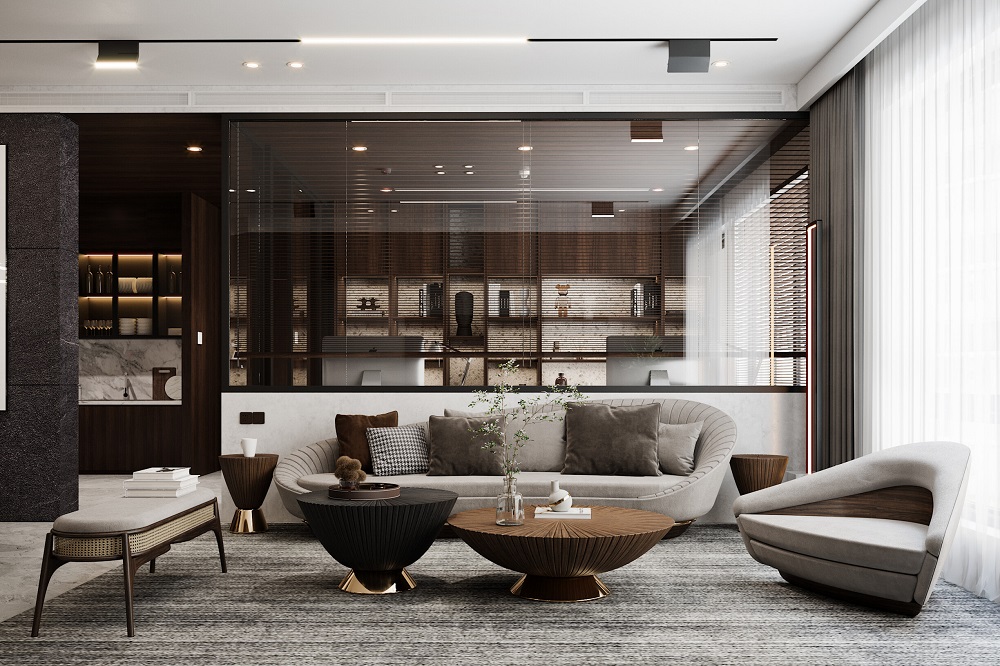
The luxury furniture market is undergoing a significant transformation. Discerning homeowners, interior architects, and design collectors are moving away from mass-produced opulence and sterile minimalism. Today, high-end furniture emphasizes intentional craftsmanship, tactile authenticity, bespoke individuality, and architectural harmony.
True luxury in contemporary interior design is defined by how a piece makes an environment feel. It is about the sensory dialogue between raw, honest materials and sophisticated, sculptural engineering. From the revival of heritage craft techniques to the thoughtful integration of sustainable materials and ergonomic organic forms, modern high-end furniture trends offer compelling opportunities to design expressive, timeless residential spaces.
Sculptural and Curved Silhouettes
Rigid, boxy profiles and sharp right angles are giving way to fluid, undulating forms. Inspired by mid-century modern masters and contemporary organic architecture, curved furniture softens the spatial lines of living areas and encourages natural movement throughout a room.
-
Curved Sectionals and Sofas: Kidney-shaped seating and sweeping semicircular sofas anchor open-concept living rooms, establishing an intimate seating layout that naturally fosters conversation.
-
Arched and Asymmetrical Consoles: Credenzas and sideboards with pill-shaped contours, fluted tambour detailing, and sweeping waterfall edges create striking focal points against flat drywall.
-
Curvilinear Dining and Coffee Tables: Freeform travertine surfaces and amoeba-shaped dining tables break the visual monotony of traditional rectangular layouts, introducing an organic balance to contemporary interiors.
These rounded contours provide an immediate sense of comfort and effortless elegance, transforming functional seating and tables into standalone works of art.
Rich Tactile Upholstery and Layered Textiles
Luxury design is as much about touch as it is about visual impact. High-end interiors are pairing refined finishes with textured textiles that add dimension, warmth, and depth to living spaces.
-
Textured Boucle and Curly Shearling: While neutral cream boucle remains a staple, deep-toned boucles in rust, olive, and espresso are defining a richer, moodier aesthetic on accent chairs and upholstered headboards.
-
Heavy Mohair and Slubbed Linens: Mohair velvets and raw, unrefined Belgian linens bring durability, understated luster, and tailored structure to primary sofas and drapery panels.
-
Hand-Woven Chunky Tweeds and Chenilles: Multitonal weave patterns incorporating varied yarn thicknesses provide depth to minimalist furniture silhouettes, making neutral color schemes feel layered and dynamic.
-
Supple Saddle Leathers: Richly oiled, full-grain aniline leathers that develop a unique patina over time are favored over uniform, overly processed leather hides.
Layering contrasting textiles across a single room creates a welcoming, sensory environment that feels curated rather than staged.
Monumental Natural Stone and Expressive Marbles
The understated look of uniform white Carrara marble has shifted toward bold, expressive natural stones with high-contrast veining and rich geological coloration. Natural stone is no longer reserved just for countertops; it is being carved into monumental furniture centerpieces.
| Stone Variety | Characteristic Visual Profile | High-End Design Application |
| Calacatta Viola | Deep burgundy and wine-red veining on ivory background | Dramatic cocktail tables and fluted pedestal stands |
| Silver Travertine | Porous linear striations in cool gray and warm taupe | Heavy monolithic dining tables and low plinths |
| Green Onyx | Translucent sage and deep emerald crystalline layers | Backlit accent consoles and jewel-box side tables |
| Rosso Levanto | Dramatic dark red with sharp white calcite fractures | Statement credenza tops and monolithic entryway blocks |
Designers are treating these expressive slabs like fine sculpture, highlighting raw chipped edges, brushed leathered finishes, and honed matte surfaces over traditional high-gloss polish.
Sustainable Luxury and Bio-Based Craftsmanship
Modern luxury is deeply linked to provenance, environmental stewardship, and ethical material sourcing. Affluent consumers and interior designers increasingly demand pieces that honor ecological systems without sacrificing refinement.
-
Certified Responsibly Sourced Hardwoods: Solid European oak, American black walnut, and reclaimed architectural chestnut certified by sustainable forestry programs form the foundation of high-end millwork.
-
Natural Plant-Based Finishes: Synthetic polyurethanes are being replaced by hand-rubbed tung oils, natural beeswax coatings, and low-emission organic stains that preserve the wood grain and age gracefully.
-
Regenerative and Recycled Materials: Experimental luxury designers are incorporating upcycled aluminum structures, mycelium-based acoustic elements, and bio-composites into custom furniture commissions.
True luxury now requires transparency, with an emphasis on knowing who built an object, where the raw timber was harvested, and how the materials impact indoor air quality.
Artisanal Joinery and Heritage Techniques
In a world filled with automated mass manufacturing, handcrafted artisan methods have become the ultimate luxury marker. Visible joinery techniques celebrate the human skill and hours required to construct an heirloom piece.
-
Exposed Dovetail and Mortise-and-Tenon Joints: Prominently featured on tables and case goods, these classical woodworking joints showcase structural integrity while adding fine decorative detail.
-
Intricate Wood Marquetry and Inlay: Modern interpretations of traditional French marquetry combine contrasting wood veneers, mother-of-pearl, and delicate brass ribbons to create abstract geometric compositions on cabinet facades.
-
Hand-Hammered Forged Metals: Artisanal steel, blackened iron, and sand-cast bronze legs display intentional texture and minor surface variations that confirm their handcrafted origin.
-
Japanese Shou Sugi Ban Finishes: The ancient practice of charring timber creates a deep, carbon-rich black surface that protects the wood naturally from moisture and pests while highlighting wood grain patterns.
These timeless details turn everyday furniture into multi-generational heirlooms that gain character and financial value over time.
Warm Minimalism and Biophilic Earth Tones
The cool, sterile grays and stark white palettes that dominated the past decade have been replaced by earthy color stories that promote emotional calm and connect interiors to the natural world.
-
Warm Terracotta, Ochre, and Sienna: These sunbaked clay hues bring comforting energy to velvet dining chairs, accent pillows, and lacquered side tables.
-
Olive, Sage, and Forest Greens: Muted botanical tones act as sophisticated neutrals that coordinate naturally with both dark walnut and light white oak furnishings.
-
Deep Espresso and Smoked Timber Finishes: Dark, rich wood stains provide architectural grounding, giving rooms a sense of substance and permanence.
-
Sandstone and Warm Alabaster Accents: Replacing cold stark whites, creamy linen hues and warm sandstone plaster create soft, light-filled backdrops that flatter the human complexion and complement natural materials.
This warm, biophilic aesthetic creates calm, grounded residential sanctuaries that feel restorative and sophisticated.
Frequently Asked Questions
What constitutes true luxury furniture compared to commercial premium retail furniture?
True luxury furniture is characterized by solid high-grade materials, traditional joinery, limited-run or custom artisanal production, and exceptional attention to finishing details. Commercial premium furniture often relies on mass-production techniques, engineered wood veneers over composite boards, and synthetic surface coatings designed for fast assembly rather than multi-generational longevity.
How do I protect and maintain porous natural stone tables like travertine or unsealed marble?
Clean natural stone surfaces regularly using a soft microfiber cloth with warm water and a pH-neutral stone cleaner. Avoid acidic substances like citrus juices, wine, and harsh chemical cleaners, which cause surface etching. Reapply a high-grade penetrating stone sealer once or twice a year to prevent deep oil and liquid staining.
Why is bespoke or made-to-order furniture worth the extended lead time?
Bespoke furniture allows for exact spatial customization, ensuring that scale, ergonomics, material selections, and finishes match the architectural dimensions and lighting conditions of your home. It also supports independent master craftspeople and allows for unique, one-of-a-kind design outcomes.
How can I integrate bold curved furniture into a room with traditional straight-lined architecture?
Use curved furniture to break up geometric rigidity. A semicircular sofa placed in front of a traditional fireplace mantle creates an inviting spatial dialogue, while a round dining table softens a rectangular dining room with formal wainscoting. Balance is achieved by pairing curved pieces with linear grounding elements, such as rectangular area rugs or architectural consoles.
What is the most durable luxury upholstery fabric for households with children or pets?
High-performance mohair velvet, solution-dyed acrylic performance weaves, and top-tier semi-aniline leathers offer the best combination of luxury and durability. These materials naturally resist liquid absorption, withstand heavy abrasion rubs, and can be cleaned without compromising their soft, tactile feel.
How does lighting impact the appearance of luxury furniture finishes?
Lighting dictates how textures, wood grains, and stone colors are perceived. Warm lighting in the 2700K to 3000K range brings out the rich amber tones in walnut and the depth of warm marble, while high-CRI (Color Rendering Index) lighting ensures that nuanced textile colors and hand-rubbed patinas appear vibrant and true to life.
What should collectors look for when purchasing luxury furniture as an investment?
Focus on pieces by recognized master designers, limited-edition artisan collaborations, and works from established design galleries. Prioritize signed or stamped pieces with verified provenance, noble materials (like solid bronze, rare marble, or exotic hardwoods), and items in original or expertly conserved condition.